Senegal
This West African country enabled us to innovate in 2004 with our training approach, Les Savoirs des gens de la terre (Knowledge of the People of the Land), and we have been active there ever since.
Circular Economy

Community and Circularity
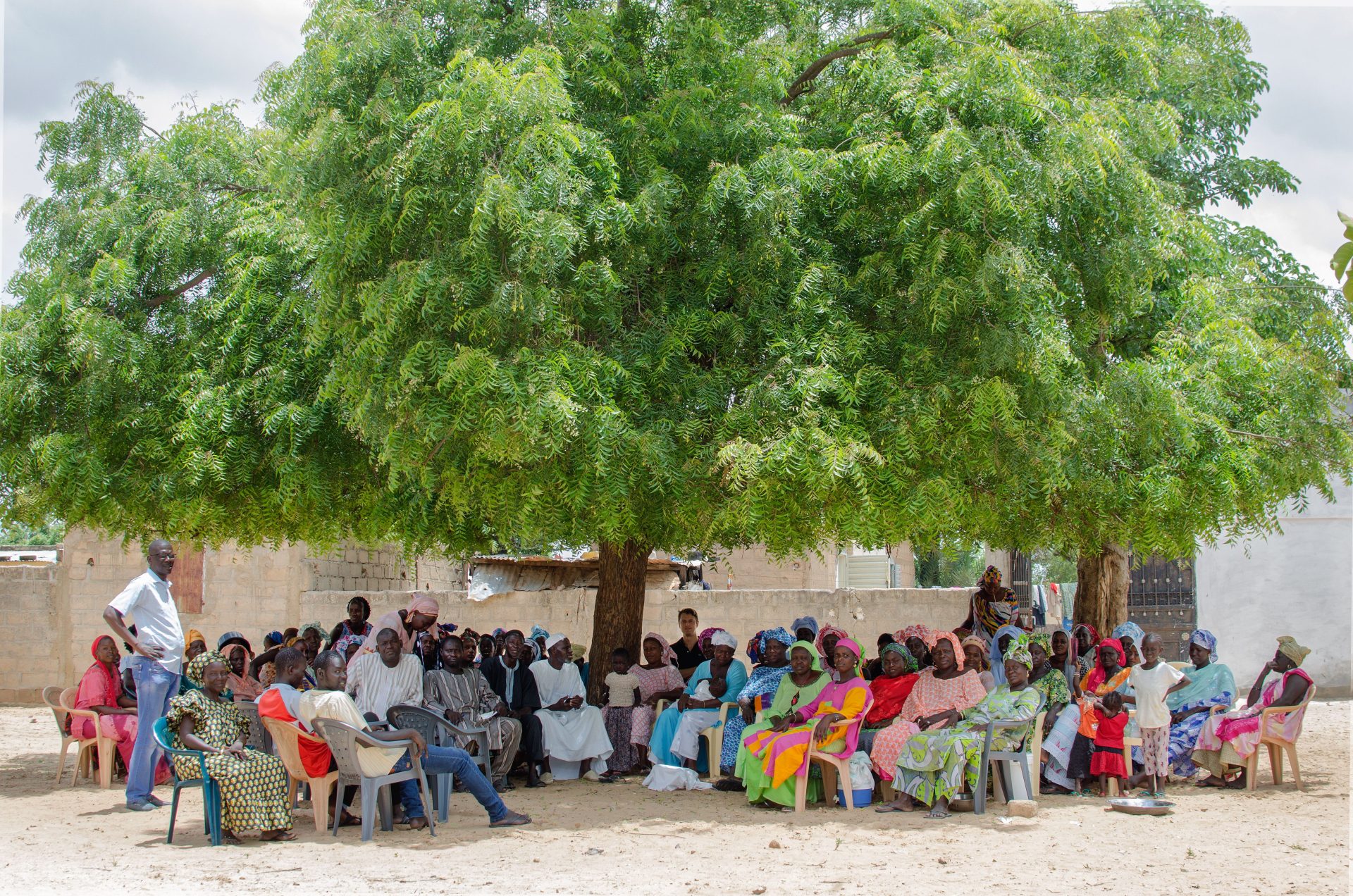
Inspired by the successes in Haiti, the circular economy project in Senegal has been implemented in the community of Mbokhadane since 2022. It aims to strengthen food security by promoting local agricultural products and creating community momentum through a school canteen.
The Mbokhadane school canteen is run by 20 women who are responsible for sourcing local produce and preparing healthy, balanced meals for 563 students twice a week. They also use the canteen premises for income-generating food processing activities.
Once again this year, some very interesting results have been observed:
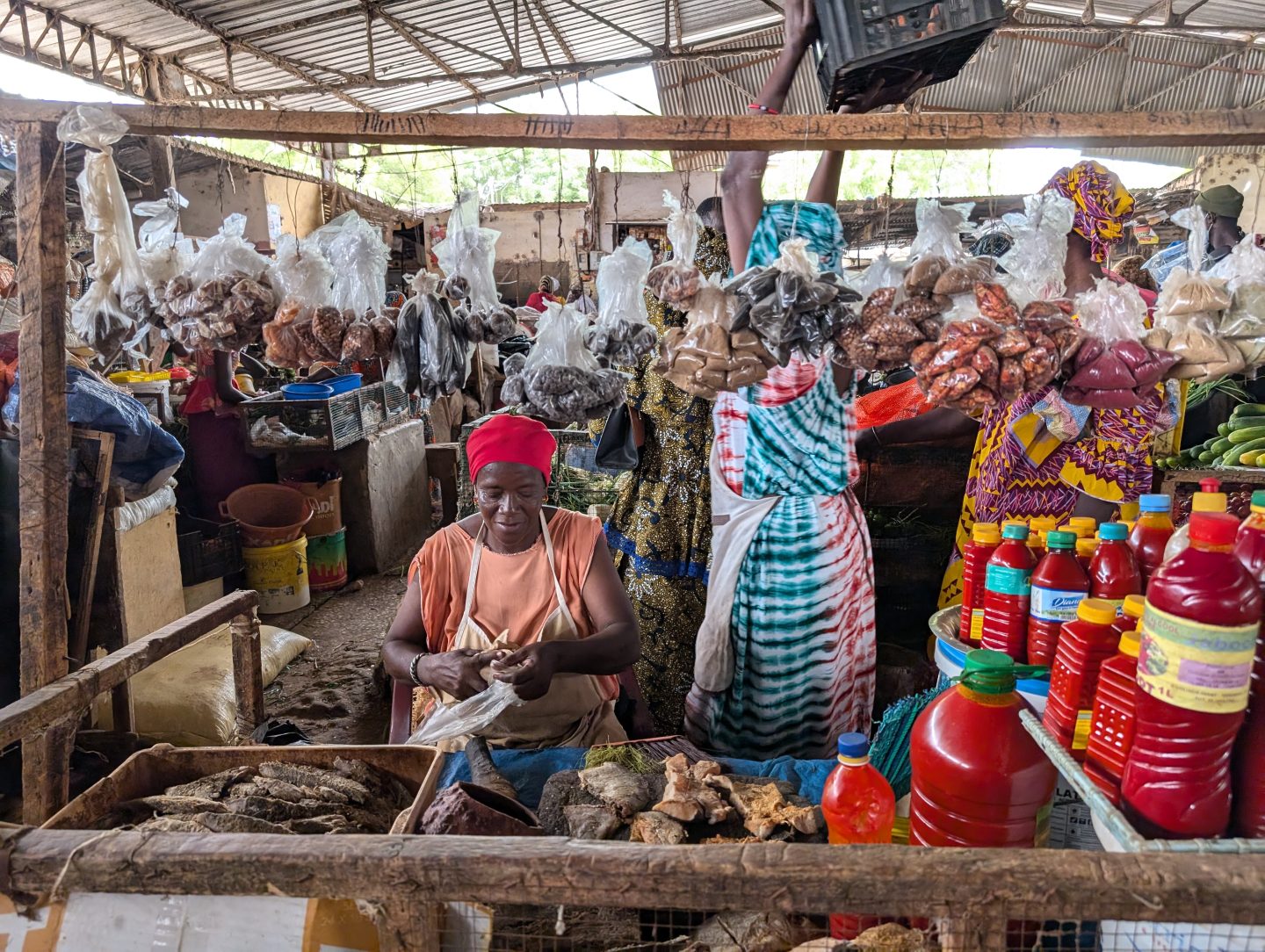
- Millet is back on the menu! Thanks to the project, this traditional local cereal, which had been abandoned in favor of rice, is once again part of the diet. The students' parents have also started contributing to the school canteen by providing millet that they grow on their family farms.
- The school canteen encourages parents to send their children to school. Several families say that previously they had to choose how many children could go to school. Now, the promise of a full meal is enough motivation for all of them to continue their education.
In addition to the canteens, the circular economy project supports the local partner, the Regional Union of Farmers' Associations of Diourbel (URAPD). This year, 53 women members of four grain processing networks were trained in financial and administrative management. They hope to eventually establish mills for processing and marketing local grains.
The Mbokhadane circular economy project is made possible thanks to financial support from Manger local fait grandir le monde, the Fonds Solidarité Sud, and Global Affairs Canada.
The Mbokhadane community is taking ownership of the project and giving it new momentum. To learn more about the inspiring people involved, check out the photo report by Marietou Diallo.
Community and circularity: a recipe for success in Mbokhodane


Kéew (SAGA 2)

A Project That Bears Fruit

Launched in 2024, the Kéew project, or Climate Resilient Family Farming Project, is being implemented as part of the Food Security and Agriculture: Accelerated Adaptation (SAGA 2) project of the Food and Agriculture Organization of the United Nations (FAO).
Kéew aims to increase the climate resilience of women and men farmers in the communities of Ngouye, Kahi, and Bayakh through the climate advisory club approach and technical data from action research.
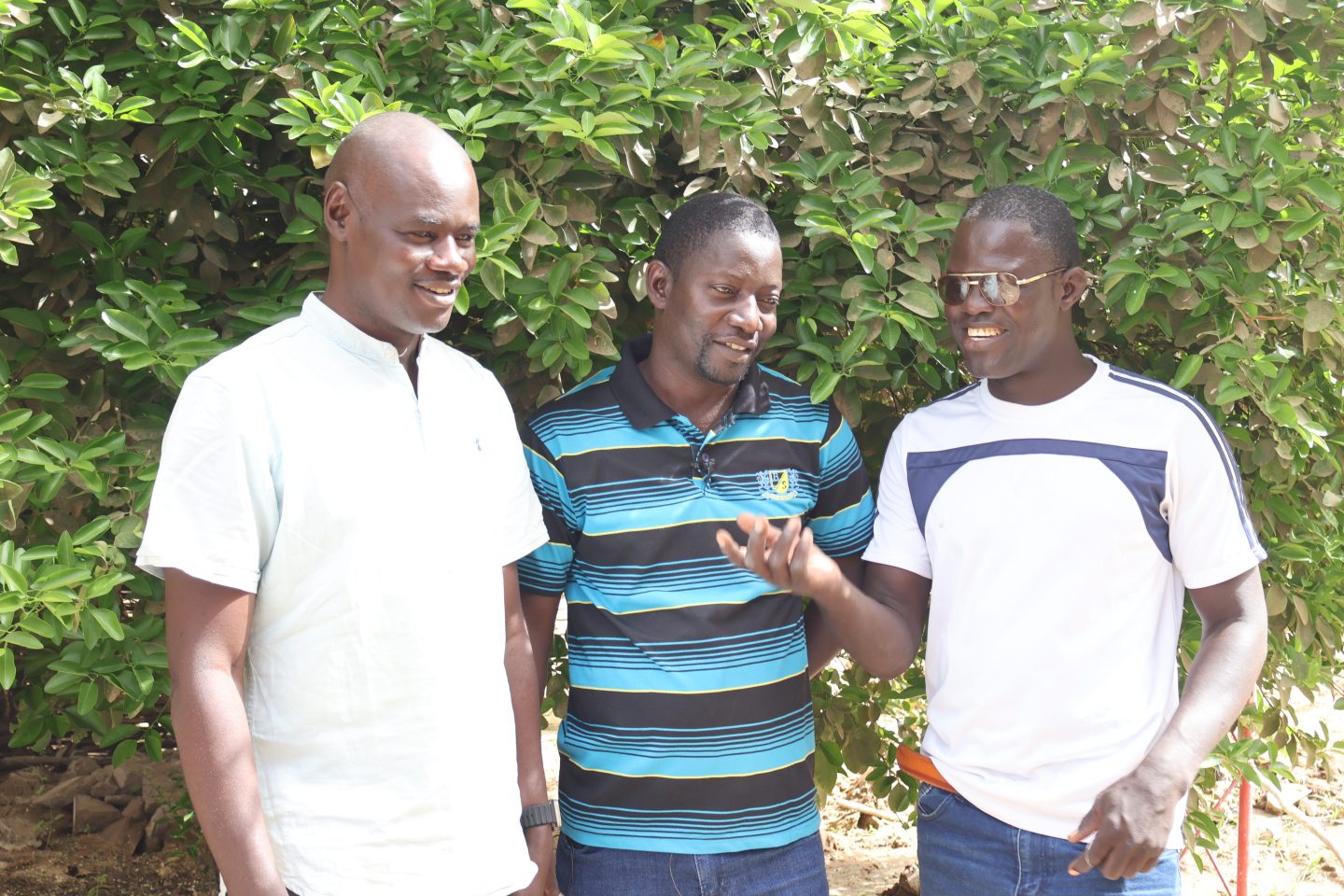
In collaboration with the National Council for Rural Consultation (CNCR) and local agricultural professional organizations, three climate advisory clubs have been set up to train 62 people (50% of whom are women) in good agricultural practices and soil health.
The training took place on demonstration plots to increase the adoption of good practices and measure their impact, while capitalizing on and disseminating these innovative approaches.
These new practices and the way they are taught are very popular with farmers. “It's a really amazing project, because they teach you how to produce better without asking anything in return,” says one producer. “It will really benefit the soil and yields.”
Following a training session on soil health, one farmer said, “Before the training, we didn't know how important it was to recover all organic residues; we used to burn them or throw them away. Now our houses are cleaner because we collect all the available residues.”
There is no doubt that the project is already inspiring behavioral changes among participating farmers. Kéew is only in its first year, but we will be following its progress closely!
The Food Security and Agriculture: Accelerated Adaptation (SAGA 2) project is coordinated by the Food and Agriculture Organization of the United Nations (FAO) through a technical and financial partnership with the Government of Quebec, via the Ministry of International Relations and La Francophonie (MRIF). In partnership with the Government of Canada.
A New Cooperative in Affiniam
In 2024, agricultural producers in Affiniam came together to create the Éronghen Étam Affiniam Cooperative (Bringing earth to life).
Born out of a collective reflection process that began in 2019 with the support of UPA Développement international and the Conseil national de concertation et de coopération des ruraux (CNCR), the cooperative now brings together villagers around a common project: to farm better, together.
Support from a long-term volunteer from the Agro-Innov Network has enabled members to be trained in various democratic roles, agricultural work planning, and community mobilization. In addition, 3,720 people participated in technical skills-building workshops to make their production more resilient to climate change.
The results of this collective effort speak for themselves! Yields have improved and young people in the village are regaining an interest in working in agriculture.
